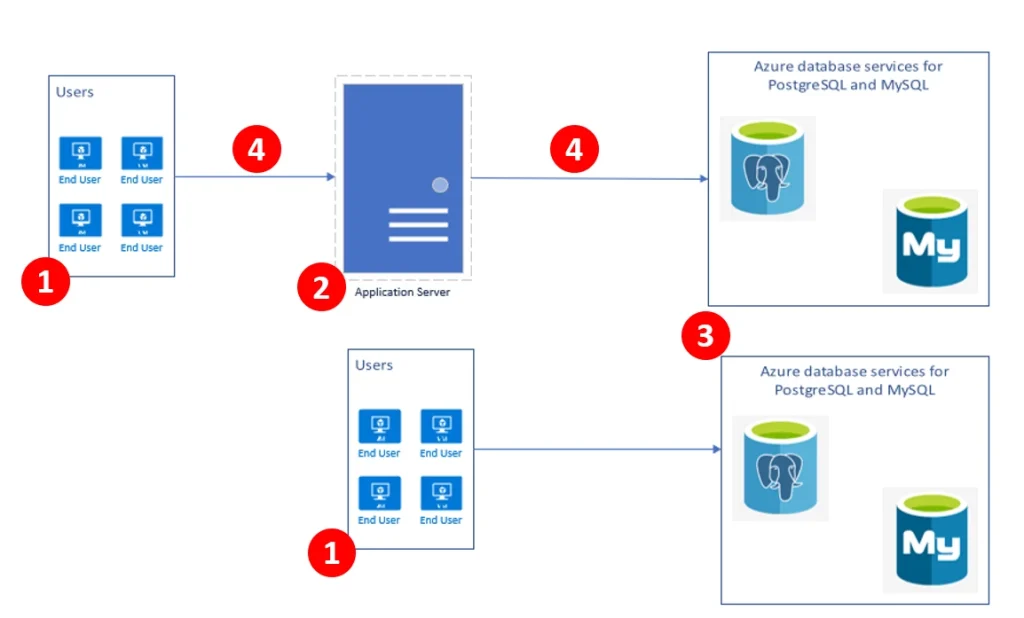
Npgsql serves as the fundamental bridge that allows .NET applications to communicate seamlessly with PostgreSQL databases. As an open-source data provider, it implements the ADO.NET specification, which is the standard data access model within the .NET framework. This means that any .NET developer familiar with ADO.NET can immediately leverage their existing knowledge to work with PostgreSQL, making Npgsql an intuitive and powerful tool. It translates the calls made in a .NET language like C# or VB.NET into a format that the PostgreSQL database server can understand and execute.
The primary role of Npgsql is to manage the entire lifecycle of a database interaction, from establishing a secure and efficient connection to executing commands and retrieving results. It handles the low-level protocol communication, connection pooling, and data type marshalling, abstracting away the complexities of the PostgreSQL wire protocol. This abstraction allows developers to focus on their application’s business logic rather than the intricate details of database networking. Without a dedicated provider like Npgsql, connecting a .NET application to PostgreSQL would be a highly complex and error-prone task.
In essence, Npgsql is the critical component that unlocks the power and robustness of PostgreSQL for the entire .NET ecosystem. Whether you are building a high-traffic web application with ASP.NET Core, a desktop application with WPF, or a backend service with .NET, Npgsql provides the reliable and high-performance conduit for your data operations. Its existence ensures that developers can choose PostgreSQL for its advanced features without being locked out of the productive and feature-rich .NET development environment.
The Core Purpose of Npgsql
The Official .NET Data Provider for PostgreSQL
Npgsql holds the distinction of being the official and most widely adopted .NET data provider for the PostgreSQL database system. This “official” status signifies a strong alignment with PostgreSQL’s development goals and a commitment to supporting new database features as they are released. It is not a third-party afterthought but a core component actively maintained by a dedicated community, ensuring its reliability, security, and performance for production workloads. This makes it the trusted choice for enterprises and developers alike.
Bridging the Gap Between .NET and PostgreSQL
At its heart, Npgsql functions as a translator and a messenger between two distinct technological worlds: the managed environment of .NET and the powerful, open-source world of PostgreSQL. It takes standard ADO.NET calls from a .NET application and converts them into the specific binary protocol that PostgreSQL understands. This process works in both directions, taking query results, error messages, and status notifications from PostgreSQL and presenting them as familiar .NET objects, thus creating a seamless and transparent interaction layer.
Why a Dedicated Provider is Essential
Using a generic database connector would mean missing out on the unique and powerful features that make PostgreSQL a standout database. Npgsql is specifically designed to harness these capabilities, such as its advanced data types like JSONB and arrays, its robust support for geometric data, and its sophisticated notification system. A dedicated provider ensures that developers can utilize the full potential of PostgreSQL, leading to more efficient, feature-rich, and performant applications compared to using a one-size-fits-all database solution.
Key Features and Advantages of Using Npgsql
High Performance and Optimized for Speed
Npgsql is engineered from the ground up for performance, making it suitable for applications that demand high throughput and low latency. It achieves this through a highly optimized implementation of the PostgreSQL wire protocol and a very efficient connection pooling mechanism. This pool of ready-to-use connections eliminates the significant overhead of establishing a new connection for every database query, dramatically speeding up response times in web applications and services under heavy load.
Full Support for Modern PostgreSQL Features
One of the most compelling reasons to use Npgsql is its comprehensive support for modern PostgreSQL features. It allows .NET developers to work natively with advanced data types, treating them as first-class citizens within the .NET environment. This deep integration means you can leverage the full power of PostgreSQL without cumbersome workarounds or data type conversions, leading to cleaner code and more powerful applications.
- Advanced Data Types: Seamlessly work with PostgreSQL’s unique types like
JSONB,hstore, arrays, ranges, and geometric types directly in your .NET code. - Enumerations: Map PostgreSQL enums directly to .NET enums, providing type safety and readability in your application logic.
- Notifications: Utilize PostgreSQL’s
LISTEN/NOTIFYfunctionality to build real-time, event-driven applications that react to database changes instantly.
Robust Asynchronous Programming Capabilities
Modern application development, especially in web and server-side scenarios, heavily relies on asynchronous programming to build scalable and responsive systems. Npgsql has first-class, full-featured support for async/await patterns in .NET. All its I/O-bound operations, such as opening connections, executing commands, and reading data, have asynchronous counterparts. This allows your application threads to be freed up while waiting for the database to respond, enabling your server to handle many more concurrent requests efficiently.
Integrating Npgsql into Your .NET Project
Setting Up the Npgsql NuGet Package
Integrating Npgsql into a .NET project is a straightforward process managed entirely through the NuGet package manager. By adding the Npgsql package to your project’s dependencies, you instantly gain access to all the necessary classes and libraries required for database communication. This single package provides the core functionality, including the connection, command, and data reader objects, making the initial setup incredibly simple and consistent with the standard .NET development workflow.
Crafting a Secure Connection String
The connection string is the critical piece of information that tells Npgsql how to find and authenticate with your PostgreSQL database. It is a semicolon-delimited series of key-value pairs that includes the host address, port number, database name, user credentials, and various security and performance options. Properly configuring the connection string is paramount for establishing a secure and reliable link, with options to enable SSL/TLS encryption to protect data in transit between your application and the database server.
Establishing and Managing the Database Connection
The NpgsqlConnection object is the primary class used to establish a session with a PostgreSQL database. The typical pattern involves creating an instance of this object, passing the connection string to its constructor, and then calling the Open() method to initiate the connection. It is crucial to manage this connection’s lifecycle carefully, ensuring it is properly closed and disposed of after use to release resources back to the connection pool. The using statement in C# is the idiomatic way to guarantee this.
Executing Database Commands with Npgsql
Using NpgsqlCommand for SQL Queries
Once a connection is established, the NpgsqlCommand object is the workhorse used to execute SQL statements against the database. You can assign any valid SQL command be it a SELECT query to retrieve data, an INSERT statement to add new records, an UPDATE to modify existing data, or a DELETE to remove rows to its CommandText property. This object is then responsible for sending the command to PostgreSQL for execution and handling the server’s response.
Retrieving Data with NpgsqlDataReader
For SELECT queries that return multiple rows of data, the NpgsqlDataReader provides a highly efficient, forward-only, read-only stream of the results from the database. Instead of loading the entire result set into memory at once, which can be resource-intensive for large queries, the data reader fetches data row by row. This approach is extremely memory-efficient and fast, making it the ideal choice for populating objects, displaying data in a grid, or processing results sequentially.
Handling Parameters for Secure Queries
Security is a non-negotiable aspect of database development, and Npgsql provides robust tools to prevent common vulnerabilities like SQL injection attacks. The correct approach is to use parameterized queries, where you define placeholders in your SQL command and then safely bind user input or variable values to these placeholders using NpgsqlParameter objects. This ensures that user input is treated strictly as data and never as executable code, completely mitigating the risk of injection.
- Preventing SQL Injection: Using
NpgsqlParameteris the definitive way to secure your queries by separating command logic from data input. - Type Safety: Parameters ensure that the data being sent to the database matches the expected type, preventing errors and data corruption.
- Performance: Parameterized queries can be parsed and planned by the database once and then reused with different parameter values, improving execution speed.
Advanced Data Access Patterns
Working with Transactions for Data Integrity
When a series of database operations must either all succeed or all fail together, transactions are essential for maintaining data integrity. Npgsql provides full support for PostgreSQL transactions through the NpgsqlTransaction object. By beginning a transaction on a connection, you can execute multiple commands, and if any one of them encounters an error, you can roll back the entire transaction, returning the database to its original state. If all commands succeed, you can commit the transaction to make the changes permanent.
Leveraging Batch Operations for Efficiency
For scenarios that require executing many commands in a row, such as a bulk insert or a series of updates, sending each command individually can be inefficient due to network latency. Npgsql supports batching, which allows you to concatenate multiple SQL commands into a single string and send them to the database server in one round trip. The server then executes all the commands sequentially, significantly reducing the overhead and dramatically improving the performance of bulk operations.
Mapping PostgreSQL Types to .NET CLR Types
Npgsql includes a sophisticated and extensible type system that automatically handles the conversion between PostgreSQL data types and their corresponding .NET Common Language Runtime (CLR) types. For example, a PostgreSQL integer is mapped to a .NET Int32, a timestamp to a DateTime, and a text to a string. This seamless mapping happens transparently, allowing developers to work with familiar .NET types in their code while Npgsql handles the underlying conversions.
- Built-in Type Mapping: Common types like numbers, strings, and dates are handled automatically without any developer intervention.
- Complex Type Support: Advanced types like
JSONBcan be mapped tostringor parsed into complex objects using libraries like Newtonsoft.Json or System.Text.Json. - Custom Type Mappings: For user-defined types in PostgreSQL, Npgsql allows you to write custom mappers to integrate them seamlessly into your .NET application.
Npgsql and Higher-Level Frameworks
Seamless Integration with Entity Framework Core
While Npgsql provides a low-level, ADO.NET-compliant interface, it also serves as the foundational data provider for higher-level Object-Relational Mappers (ORMs) like Entity Framework (EF) Core. By using the Npgsql.EntityFrameworkCore.PostgreSQL package, developers can leverage the power and productivity of EF Core, working with .NET objects and using LINQ queries, while Npgsql handles all the underlying communication with the PostgreSQL database. This combination offers the best of both worlds: rapid development and raw performance.
Using Npgsql with Micro-ORMs like Dapper
For developers who want more control over the SQL being executed than a full ORM provides but still want to avoid the boilerplate code of raw ADO.NET, micro-ORMs like Dapper are an excellent choice. Dapper works as a set of extension methods on the IDbConnection interface, which NpgsqlConnection implements. This allows you to write highly optimized SQL queries and have Dapper automatically map the results to your .NET objects, providing a very thin and fast performance layer on top of Npgsql.
The Future of Npgsql in the .NET Ecosystem
Npgsql is not a static project; it is actively developed and maintained in close step with both the .NET platform and the PostgreSQL database. The community behind it is dedicated to supporting the latest .NET releases, including performance improvements and new language features. It also strives to add support for new PostgreSQL versions and their features as soon as they are available, ensuring that .NET developers always have access to a state-of-the-art tool for connecting to one of the world’s most advanced open-source databases.
Conclusion
Npgsql is the indispensable, high-performance data provider that empowers .NET developers to fully utilize the PostgreSQL database. It bridges the two technologies with a robust, secure, and feature-rich implementation that supports everything from basic ADO.NET commands to advanced ORMs like Entity Framework Core. Its commitment to performance, security, and modern features makes it the definitive choice for building scalable and reliable data-driven .NET applications on the PostgreSQL platform.